Time Dance (1976)
(1976) Time Dance, March 26, 27, 28
Premiere: Hand Chaple, W Street, Washington, DC
(1984) Time Dance (October 12?)
Dorothy Betts Marvin Theater, 800 21 Street NW, Washington, DC
 3
3
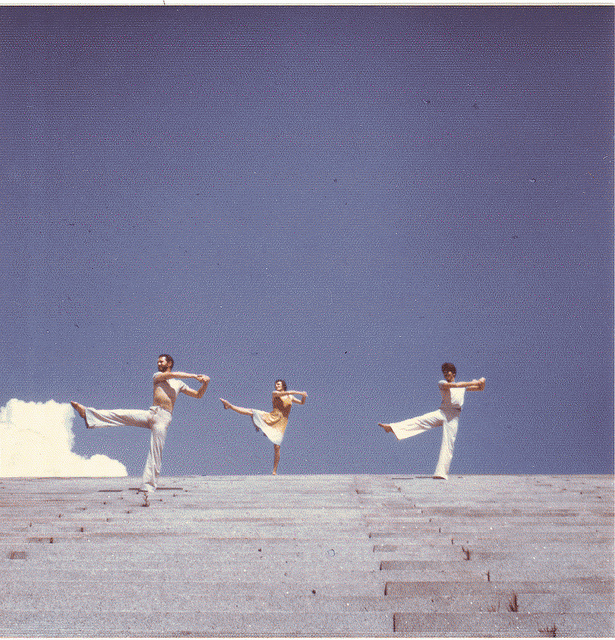
(1977) June 9 Time Dance: Found Audience – Found Space
Potomac River Site, Washington, DC
Time Dance: An evening-length performance for four or five dancers based on structures of pulse and accumulation. The continuous, audible, pulse throughout the concert is a driving force for the dancers and also an hypnotic element for the audience. Accumulation is a demanding structure. The choreography is accessible and often humorous. The 1984 concert included text spoken by John Driscoll – poetry written by Gertrude Stein and Dick Higgens.
Audiences are fascinated by Time Dance. The demanding continuation with the persistent pulse created an intensity and connectedness for the audience. The abstraction is intense but not from emotional content, but somewhat hypnotic.
Note: A script (Structure/Script for Time Dance is included in the archive folder for Time Dance.
Choreography: Dancers worked collectively on concepts and choreography, directed by Withers. Each Company member created a solo that revealed his/her unique and preferred “style” of moving to the pulse that included group accompaniment/involvement at some point in the solo. Dancers clustered together up stage involved with slow and difficult movements with cues for shifting speed – slow and fast entanglement with the pulse. The ending, 44’s, challenged each dancer to accumulate from one movement to repeating one and adding, two, then returning to the first movement and adding a new movement (1-2-3). Dancers could drop out by holding a count(s) but had to track the counts to reenter on the exact accumulative point in the phrase of 44 moves. Time Dance is an amazing structure for creating spontaneous choreography – a combination of physical discipline with creative imagination within boundaries.
(the following Structure of Time Dance would appear later)
Pulse: The pulse is paramount. Dancers achieve a comfortable relationship to the “relentless” pulse during the evening-length work. Dancers perform intricate phrases but always, relentlessly, in sink with each other and the pulse…stopping, improvising, returning to the pulse. The pulse can provide connection for the audience and dancers.
Accumulation/Deaccumulation: the act or amassing, gathering, or piling up and the reverse – deaccumulation. See 44’s below. Dancers begin the work wearing layers of clothing and remove clothing over time (deaccumulation) until all dancers are wearing a simple body leotard.
*Solos/with Group Joining: Following the introductory choreography on pulse, each dancer constructed a solo. Each solo, then, was refined and choreography for the group included – choreography that was relevant with each solo. Each of the 5 solos reflected the preferences and style of the dancer/choreographer while continuing strict reference to the pulse. Generally, each solo was based on a structure of time or space. The five dances with group accompaniment became the center (body) of Time Dance.
(See choreography notes for the solos at the end of this presentation.)
44’s/Accumulation: Final section titled, 44’s, represents an accumulation of 8 count phrases contributed by each dancer. The sequences were combined and created the final segment of Time Dance.…44 movements.
44’s, began with one movement (1) and then repeated that first movement and adding a second movement, then repeating 1 (first) and 2 (second) adding a third movement, becoming 1/2/3. Accumulation continues until the final sequence dancing 1 thru 44. All movements are set, choreographed 1 thru 44 on the pulse. Dancers may stop/hold/arrest the movement on any given count, but when the dancer joins with others he/she returns on the movement specific to that #/count. The movement continues to return to count 1 and move up to the designated # and return to Count 1. The dance moves forward by the pulse….with dancers stopping/holding/ or continuing the phrase, always keeping the pulse. At times, no one is moving but the choreography continues and returns to count one, etc.
SLOW: In the middle of the 44’s section, there is a slow section where the pulse is dropped and the dancers continued in slow motion with the phrase of counts. Also, there is a MARKING section…doing the movements in time and sequence, but very minimal execution of the movements close to the body.
FINALE: In the 44’s “Finale,” the goal for each dancer is to take advantage of the unexpected ways to create choreography dropping in and out while changing locations on stage and creating relationships with each other and the audience. It is somewhat shocking when dancers and sound arrive at count 44…and everyone stops moving, holding the final shape….. and there is SILENCE – NO PUlSE & NO MOVEMENT.
Alternative to the above script:
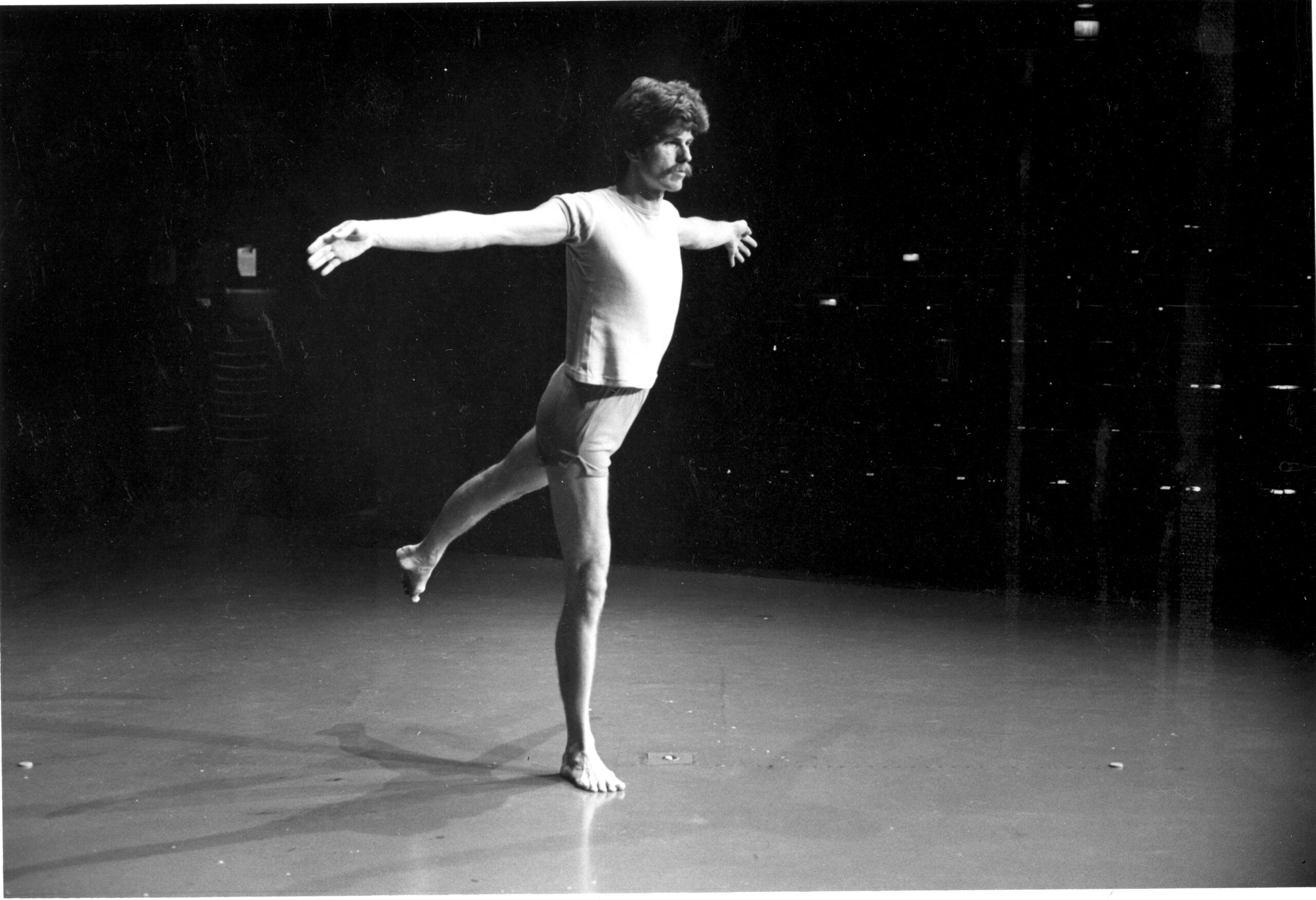 Brook Andrews
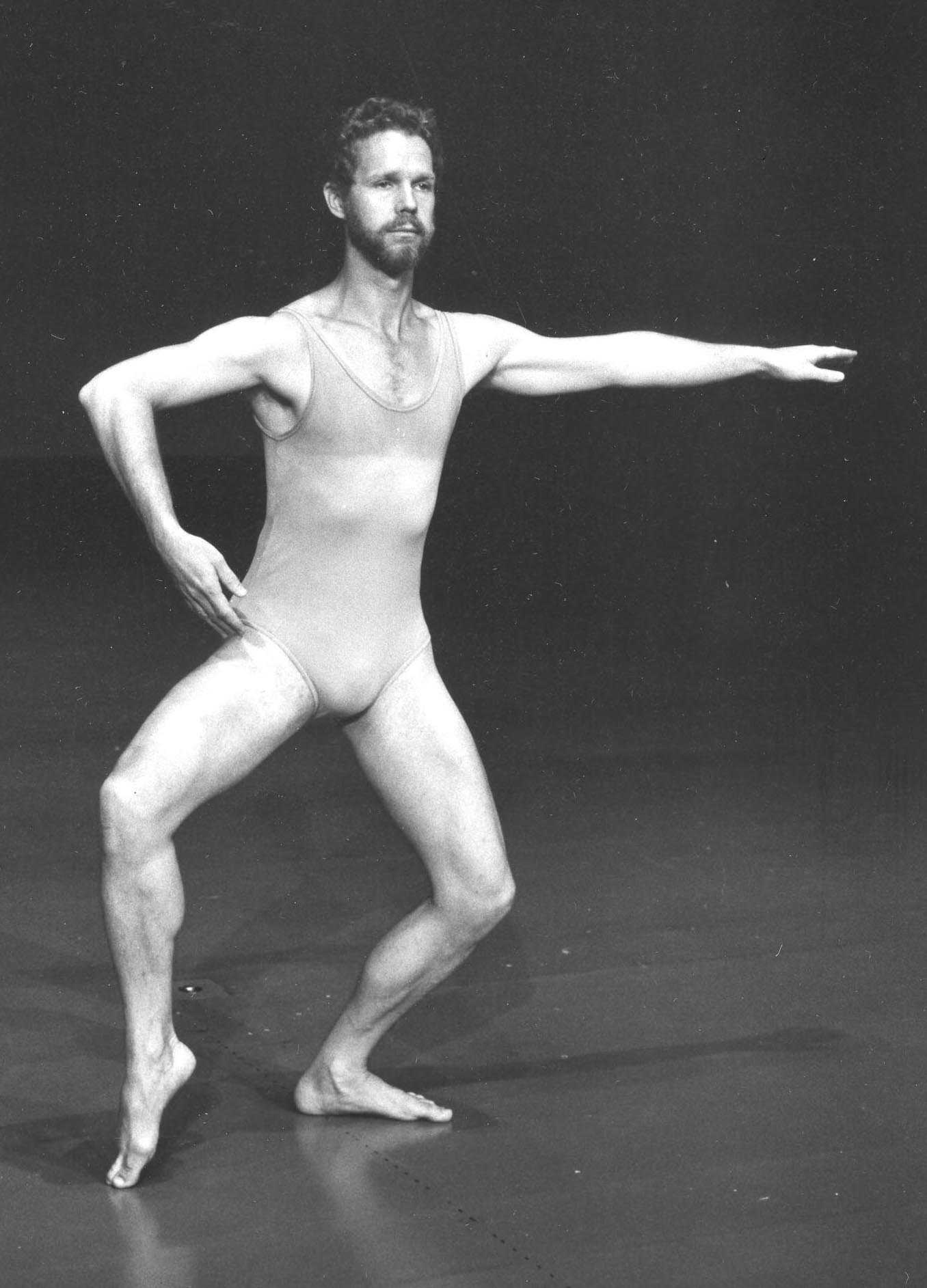 John Bailey
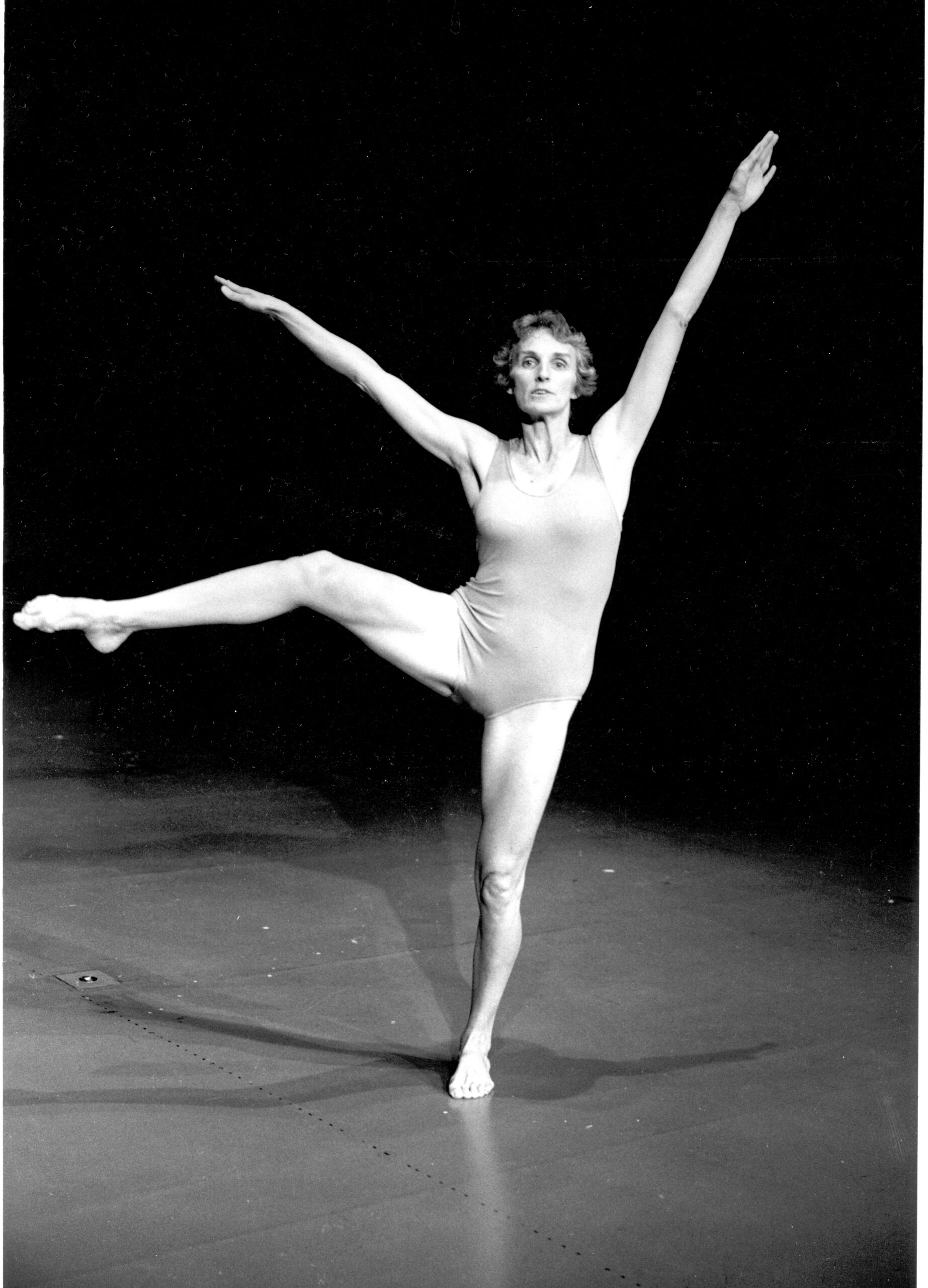
Maida WitherS
Music 1976: Live music created and performed by Steve Bloom, percussionist, combining the pulse of a recorded gong with live instruments and the synthesizer (Hand Chapel).
Washington, DC with Music for Miniature Objects by John Driscoll.
No Music 1977: Found Audience – Found Space performed on cement stairs at a Potomac River site with urban outdoor sounds (cars on the freeway, birds).
Music 1984: Music for Miniature Objects by John Driscoll (Electronic music and children’s toys, a plastic tube, drums) and John Driscoll reciting fragments of poems by Gertrude Stein (Geography and Plays – Sacred Emily) and Plays by Dick Higgins (Foew & OMBWHNW, Cowboy Plays (Dorothy Betts Marvin Theater).
https://maidadance.com/works/time-dance-found-audience/
Costumes by John Bailey: Tie-dyed layers of cotton costumes in shades of sky blue, yellow, and water green. Each dancer had a leotard, cotton shorts and a T-shirt, long cotton pants or a skirt. Clothes were de-accummulated (taken off and put in one pile on stage during the performance) and finally dressed in a simple leotard during the final section of the dance.
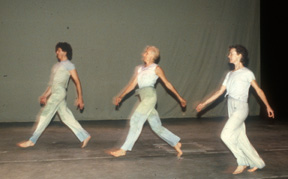
Brook Andrews, Maida Withers, Susan Jamieson (1984)
1977 and 1984 Time Dance: Dorothy Betts Marvin Theatre
Washington, DC with Music for Miniature Objects by John Driscoll.
MRW ORIGINAL NOTES
Time Dance: 1976 (March 26, 27, 28) Hand Chapel, Washington, DC.
Time Dance: Found Audience – Found Space: 1977 (date?) Potomac River Site
Time Dance: 1984 (?) Dorothy Betts Marvin Theater, Washington, DC
(1976) March 26, 27, 28 Time Dance Premiere: Hand Chapel, Washington, DC
Time Dance – An evening-length performance for five dancers based on structures of pulse and accumulation. A metronome provided the repetitive pulse during all rehearals. Dancers mastered snapping the finge rs keeping with the pulse while walking and changing direction, stopping and starting, becoming at ease with moving through space with a large dance walk, intersecting and moving with other dancers in and through the space. Sometimes moving into a run, doubling the counts 1&a, 2&a, etc. Stopping and improvising….begin ning to finding choreography to the pulse.
Choreography:
The dance begins with finger snapping the pulse and dancers walk in straight lines, snapping fingers to the pulse, and changing directions, continue the finger snapping, stepping off the line (holding & improvising) returning to the line and walking during the first 10 minutes. The pulse appeared in the movement or as sound throughout the entire continuous performance. Since the music would be created and performed live, dancers rehearsed from the beginning with a metronome.
The dance has distinctive sections for concepts/choreography.
Each dancer was invited to create/construct a solo. Each solo, then, was refined and choreography for the group included – choreography that was relevant and possible as part of each solo. Each of the 5 solos reflected the preferences and style of the choreographer but continued reference to the pulse. The five solos with group accompaniment became the enter body of Time Dance.
The final section titled, 44’s, represented an accumulation of an 8 count phrases contributed by each dancer. The sequences were combined and created the final segment of Time Dance. That segment, titled 44’s, began with one movement and then repeated the first movement and added a second movement, then a third movement was added to the first two and became 1/2/3 and on on up to the full phrase 1/2/3/4, etc up to 44. All movements were set/choreographed 1 thru 44 on the pulse. Dancers could stop/hold/arrest the movement on any given count, but when the dancer joined with others he/she came in on the movement specific to that #/count. The counts/movement continued to return to count 1 and move up to the designated # and return to Count 1. The dance moved forward by the pulse….with dancers stopping/holding/ or continuing the phrase – keeping the pulse. Sometime no one was moving but the choreography was continuing and returning to count one, etc. In the middle of the 44’s section, there was a slow section where the pulse was dropped and the dancers continued in slow motion with the phrase of counts. Also, there was a “marking” section. Doing the movements in time and sequence, but very minimal execution of the movements close to the body. In the 44’s Finale, the goal for each dancer was to take advantage of the unexpected ways to create choreography dropping in and out while changing locations on stage and creating relationships with each other and the audience. It is almost shocking when dancers and sound arrive at count 44…and everyone stops moving, holding the final shape….. and there is SILENCE – NO MOVEMENT.
Choreography: Maida Withers and Company. Dancers worked collectively on concepts and choreography, directed by Withers. Each Company member had a solo, they created, with group accompaniment or joining in specific timing. One group section, dancers clustered together up stage, involved slow and difficult movements with cues for shifting speed – slow and fast. The ending, 44’s, challenged each dancer to accumulate from one movement to repeating one and adding, two, then returning to the first movement and adding to movement (1-2-3). Dancers could drop out by holding a count(s) but had to track the counts to reenter on the exact accumulative point in the phrase of 44 moves. This is an amazing structure for creating spontaneous choreography – a combination of physical discipline with creative imagination within boundaries.
Audiences are fascinated by Time Dance. The intensity of the dancers creating spontaneously but with very specific expectations, demanding continuation with the persistent pulse, created an intensity and connectedness for the audience. The abstraction is intense but not from emotional content…somewhat hypnotic.
Costumes by John Bailey: Tie-dyed layers of cotton costumes in shades of died sky blue, yellow, and water green. Each dancer had a leotard, cotton shorts and a T-shirt, long cotton tie pants, or a skirt. Clothes were de-accummulated (taken off during performance) finally coming down to just the leotard, only, during the end of the dance.
Music 1976: First performance features live music created and performed by Steve Bloom, with a synthesizer and instruments using tape an live instruments and a synthesizer (Hand Chapel).
Music 1984 : Music/sound, by John Driscoll, included sounds from children’s toys, a whistle, a plastic tube, and reciting excerpts of poems by Gertrude Stein (Geography and Plays – Sacred Emily); Plays by Dick Higgins (Foew & OMBWHNW, Cowboy Plays (Dorothy Betts Marvin Theater).
No Music 1977: Found Audience – Found Space performed during rush hour, out of doors, behind Lincoln Memorial, on stairs leading to the Potomac River, Washington, DC
https://maidadance.com/works/time-dance-found-audience/
1984: Final performance, (Dorothy Betts Marvin Theater)
1976 Time Dance Premiere: Hand Chapel, Washington, DC. March 26, 27, 28, 1976.
1977 and 1984 Time Dance: Dorothy Betts Marvin Theatre
Washington, DC with Music for Miniature Objects by John Driscoll.
Solo Dances: Individual Dance Scores (original notes) available in the archives.
Artists and Collaborators
- Dancers / Collaborators (1976)
- Tie-Dyed Costumes
- Music (1976)
- Music (1977 and 1984)
- Dancer (1977) ?
- Dancers (1984)
- Light Design
- Dancers -Found Audience Found Spacege)