White Mansions – Holy Rood Cemetery
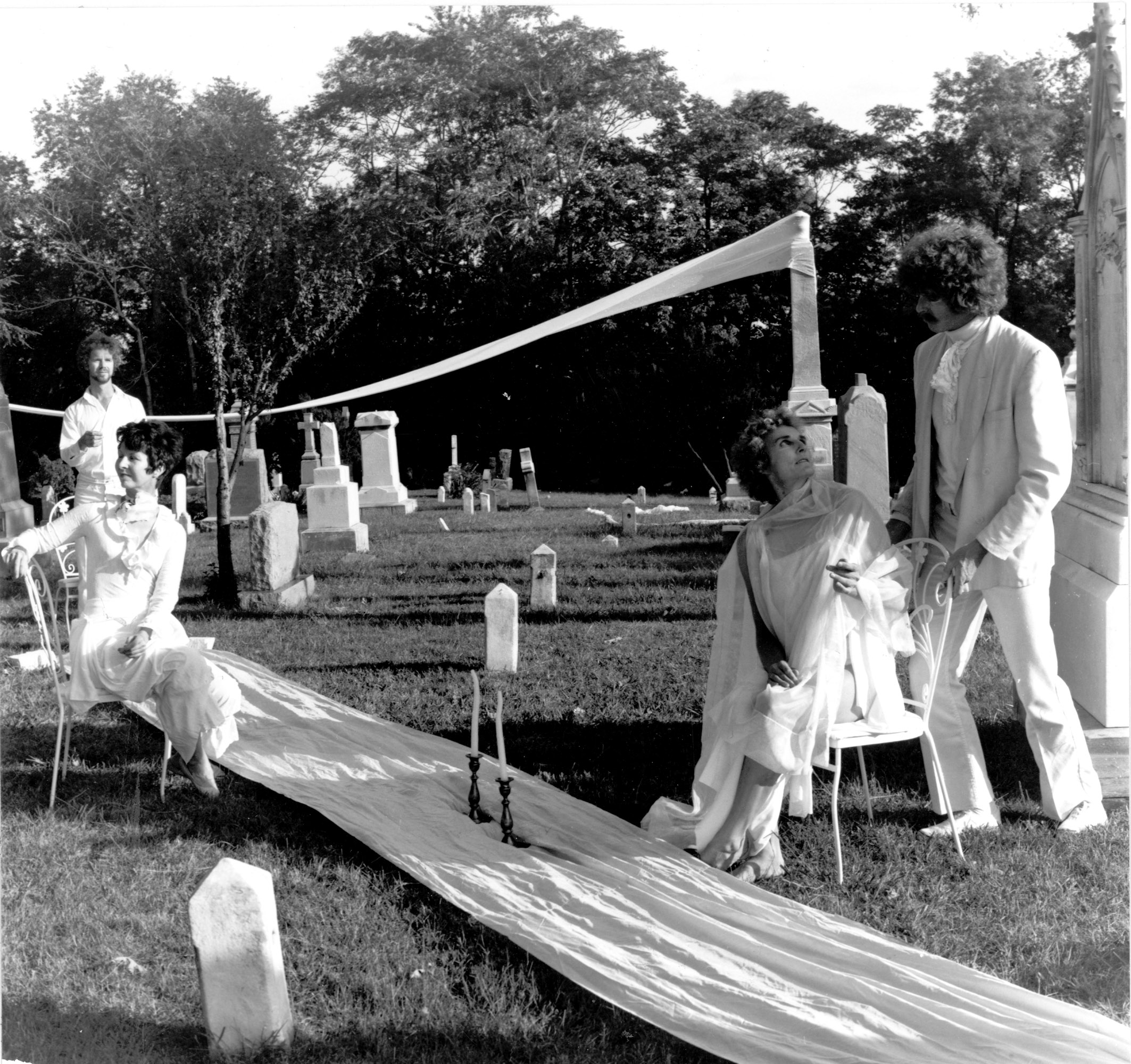 John Bailey, JoAnn Sellars, Maida Withers, Brook Andrews
(1975) September 13 – 14 (Sat/Sun) check dates, Washington Project for the Arts and Holly Rood Cemetery – newspaper date) WHITE MANSIONS, “The South” – a facade – eloquence lost.” 60 minutes
In 1975, Dance Construction Company rehearsals took place in the newly renovated Washington Project for the Arts (WPA) space on 1227 G Street NW, Washington, DC. Dance Construction Company dancers assisted in cleaning out the pigeon dung in the 3rd floor planned performance space. While cleaning, dancers discovered a long piece of white silk fabric that, eventually, inspired the development of characters representative of our romantic view of America’s deep south, a Gone with the Wind perspective. For White Mansions, each dancer developed a character type: Maida Withers, the death figure; Brook Andrews, Rhett Butler type; John Bailey, Tom Sawyer; Betty Tittsworth, Cat on a Hot Tin Roof; JoAnn Sellars, a fussy Southern Belle.
1975 -Saturday and Sunday dates TBD (6:00 pm)
White Mansions – A 60 minute site specific performance at dusk in the historic Holy Rood Cemetery located in upper Georgetown in Washington, DC. Holy Rood is one of the oldest cemeteries (1832) in Washington, DC. White Mansions, a one hour performance, was performed for two evenings at dusk, Saturday and Sunday, include dates. Performers include Brook Andrews, John Bailey, JoAnn Sellars, Betty Tittsworth, and Maida Withers. A supporting cast of children and adults wearing whiwere in peripheral spaces, carrying flowers and playing games, other.
White stretch fabric was stretched through the trees and around the tombstones in the cemetery. Stretch fabric was provided by an elementary school recycling center in New London, Connecticut where Maida and JoAnn had been in a residency with Artists-in-the-Schools National Dance Program. Sadly, the fabric was removed, stolen?, from the cemetery overnight, Saturday, and, of course, unavailable for the Sunday performance. A local radio station kindly broadcast a request for the return of the stretch fabric while inviting the DC audience to attend the Sunday evening performance in the beautiful, peaceful, Holy Rood Cemetery.
The long white piece of silk found earlier at the WPA site serves as a connector throughout the piece, White Mansions, as it becomes a wedding veil, a table for celebration, a wrap for death, other.
Several children and adult performers are in the cemetery carrying flowers and playing in white clothes engaged as if they lived there, suggesting the continuity of life after death. A Marimba (keyboard) was the instrument for the performance in the cemetery. (Musician unknown at this time). Church Bells playing in the neighborhood were a spontaneous, delightful, addition to our early evening performances.
At the conclusion of the cemetery celebration, dancers climbed into a classic Gold Rolls Royce, departing the cemetery leaving the audience in the cemetery in the dark…perhaps an opportunity for confronting his/her view of death. The Rolls Royce was driven by the beloved Charles Stinson (Charles The First, celebrated DC salon on Connecticut Avenue.
The performance had what we call “scenes” where each character was featured: A dining scene around a long white silk table with somewhat fussy behaviors, a marriage/wedding scene, a playful scene of hide and seek, and ultimate scenes involving the death figure. The audience became very comfortable during the event and stood among, even rested on the large headstones.The Washington Post covered the story with a full page photo, of Betty Tittsworth, the bride. This delightful recognition was important introducing the greater public to Maida and the Company’s interest in “site specific work” as well as “interactive stage performances.”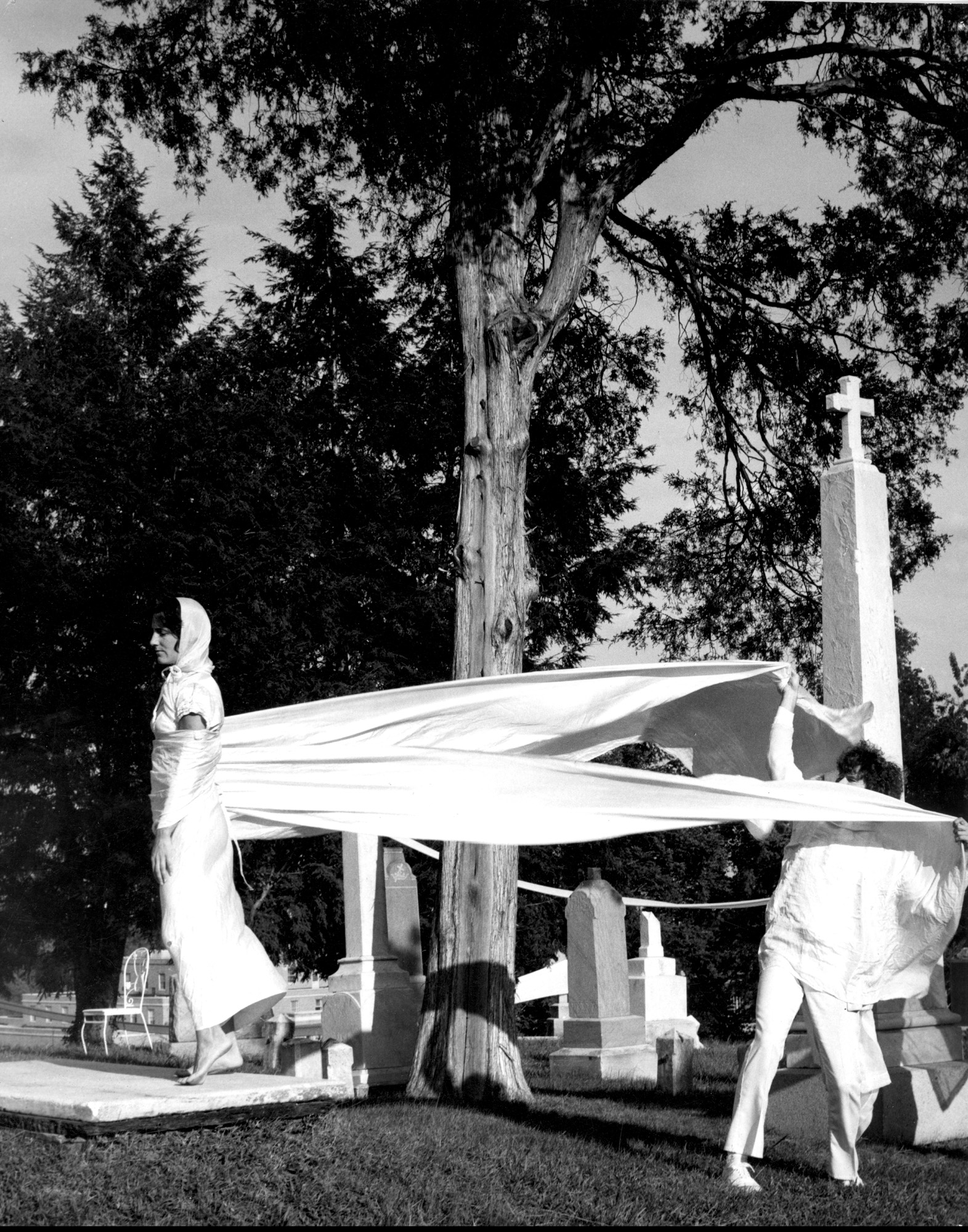 Betty Tittsworth and Brook Andrews, wedding scene
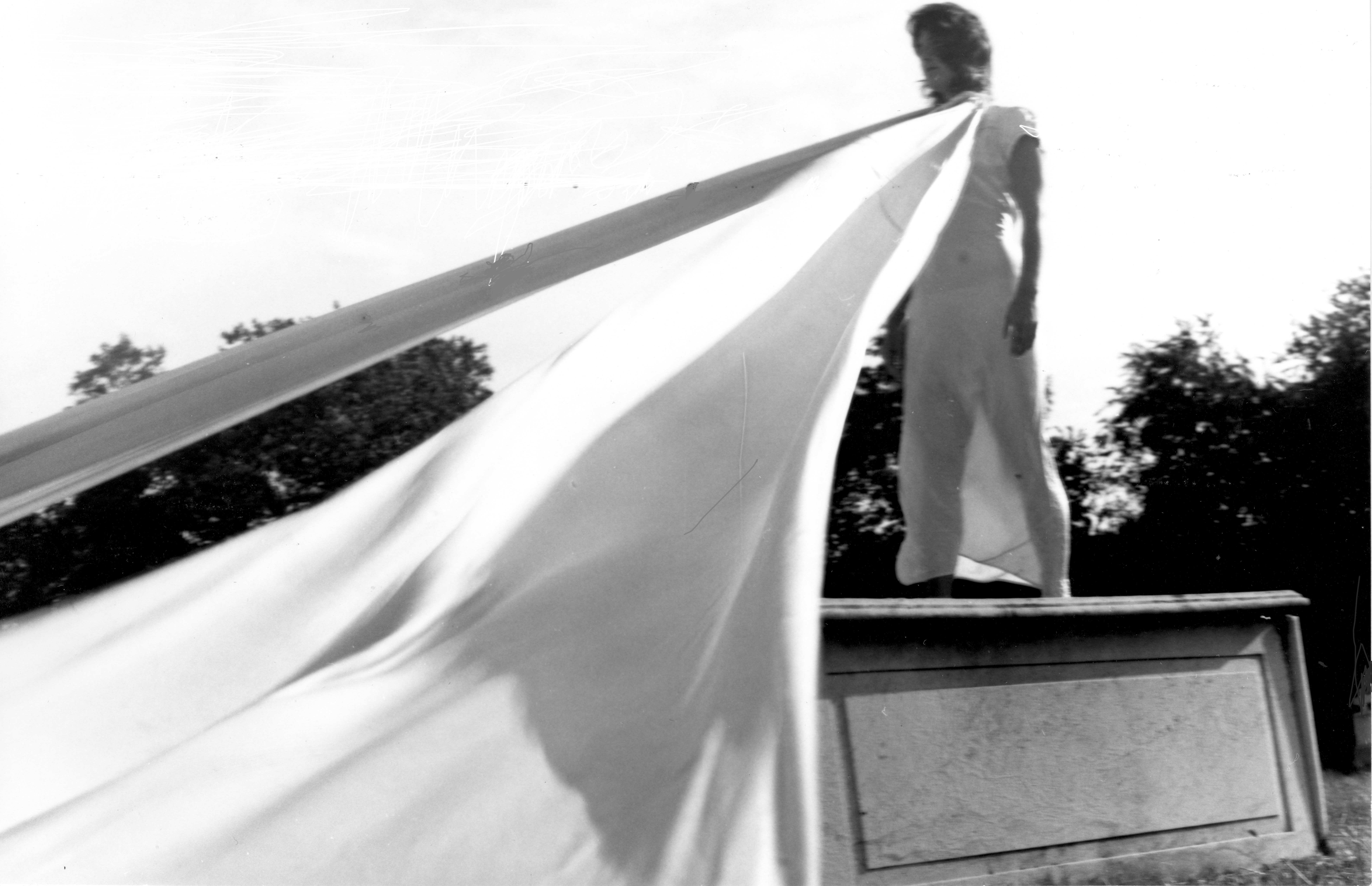 Betty Tittsworth (promotional photo for press); Full page photo, Washington Post.
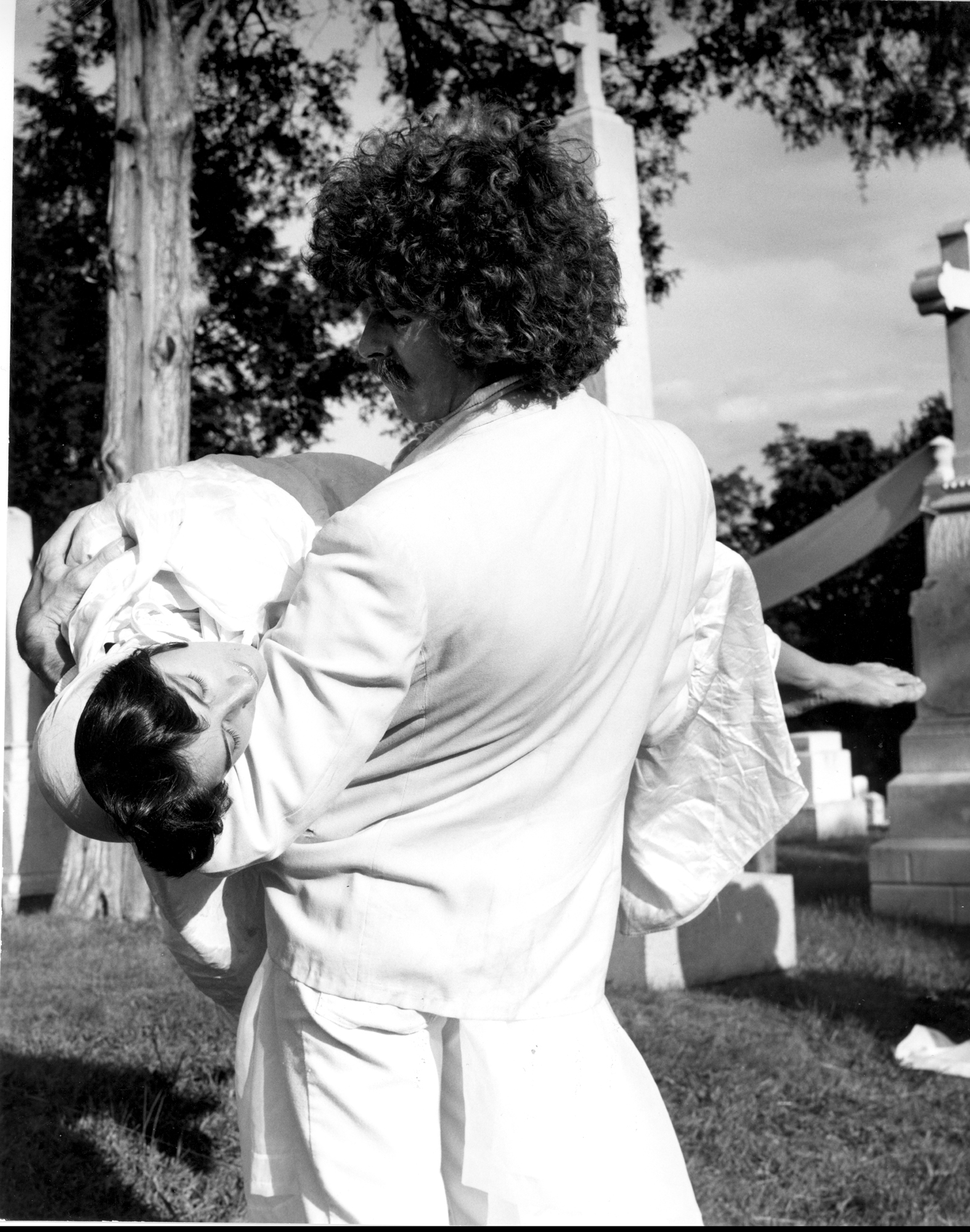 Betty Tittsworth and Brook Andrews
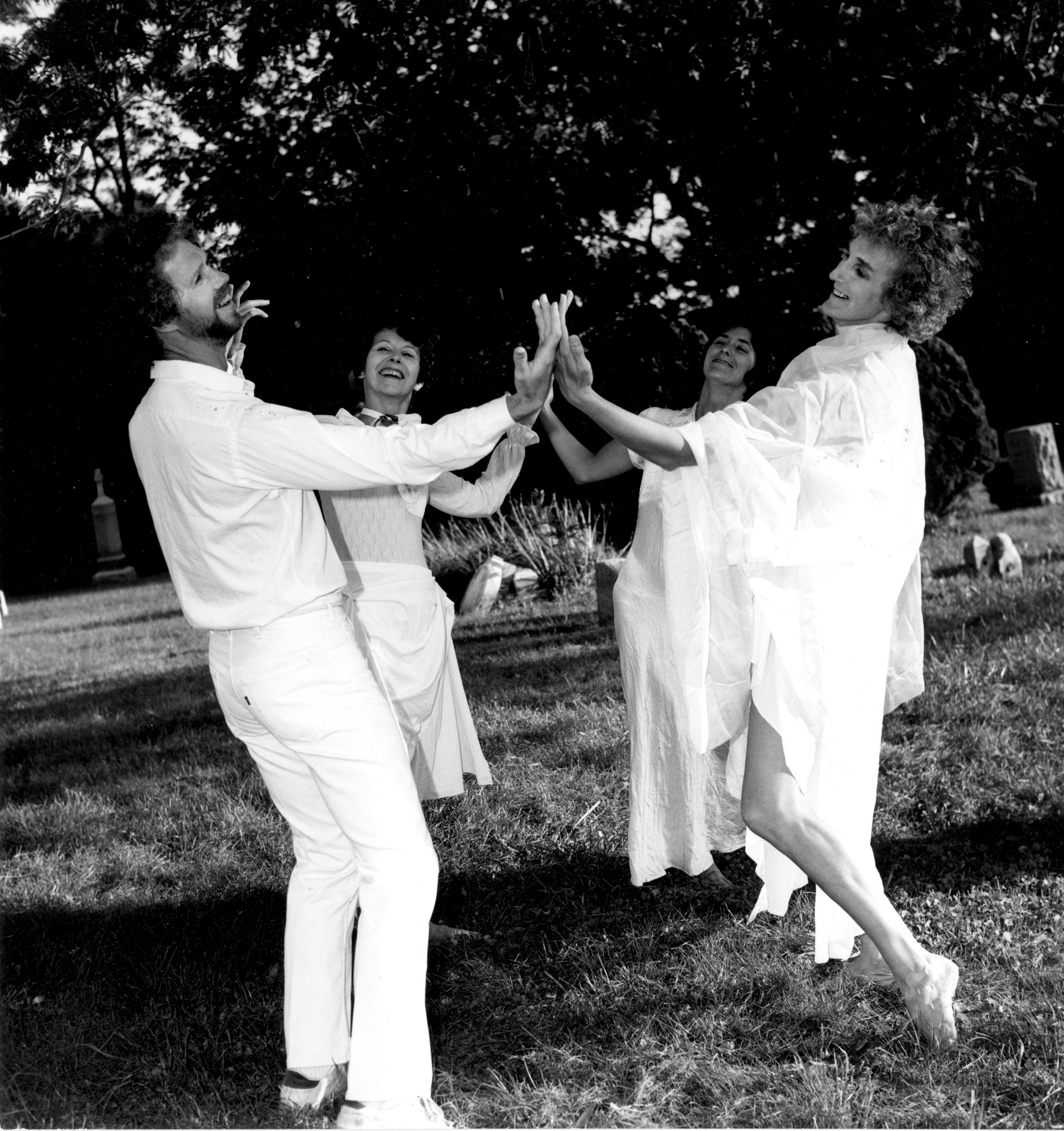 John Bailey, JoAnn Sellars, Maida Withers, social exchange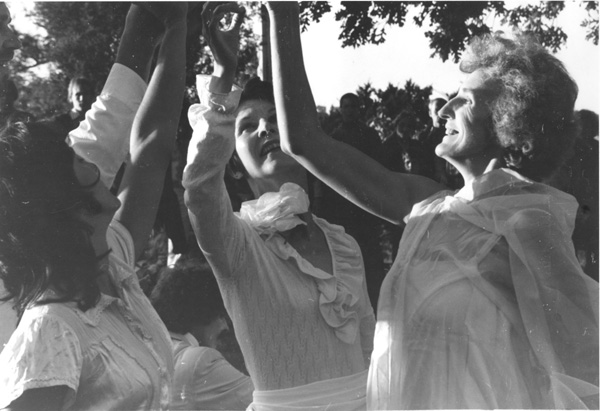
Company, celebration
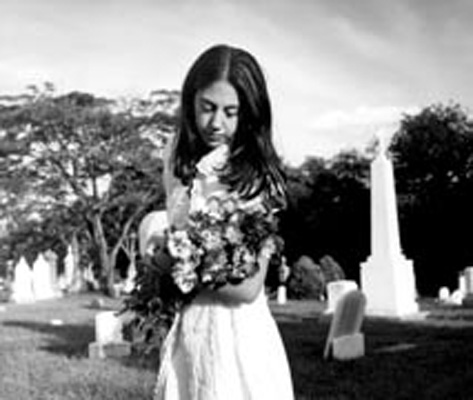
Cathy Borteck, group adults and children residing in the cemetery.
Video was shot, regrettably, on a reel to reel 1/2″ tape that had been used previously, which accounts for intrusive/excessive lines on the video from the reused tape.
Artists and Collaborators
- Concept/Choreographer
- Dancers/Collaborators
- Musician / Mirimba Player
-
- Set Design
- Costumes
- Dancers -Temporary Residents
- Gold Rolls Royce
Other Performances
- Washington Project for the Arts(map) on January 1, 1970