DIGG – a provocative excavation – current political landscape
“Withers has created a work that spans the human experience of witnessing modern American politics: anxiety, fear, anger, nervous laughter and resilient hope.” Cassie Patterson (2018)
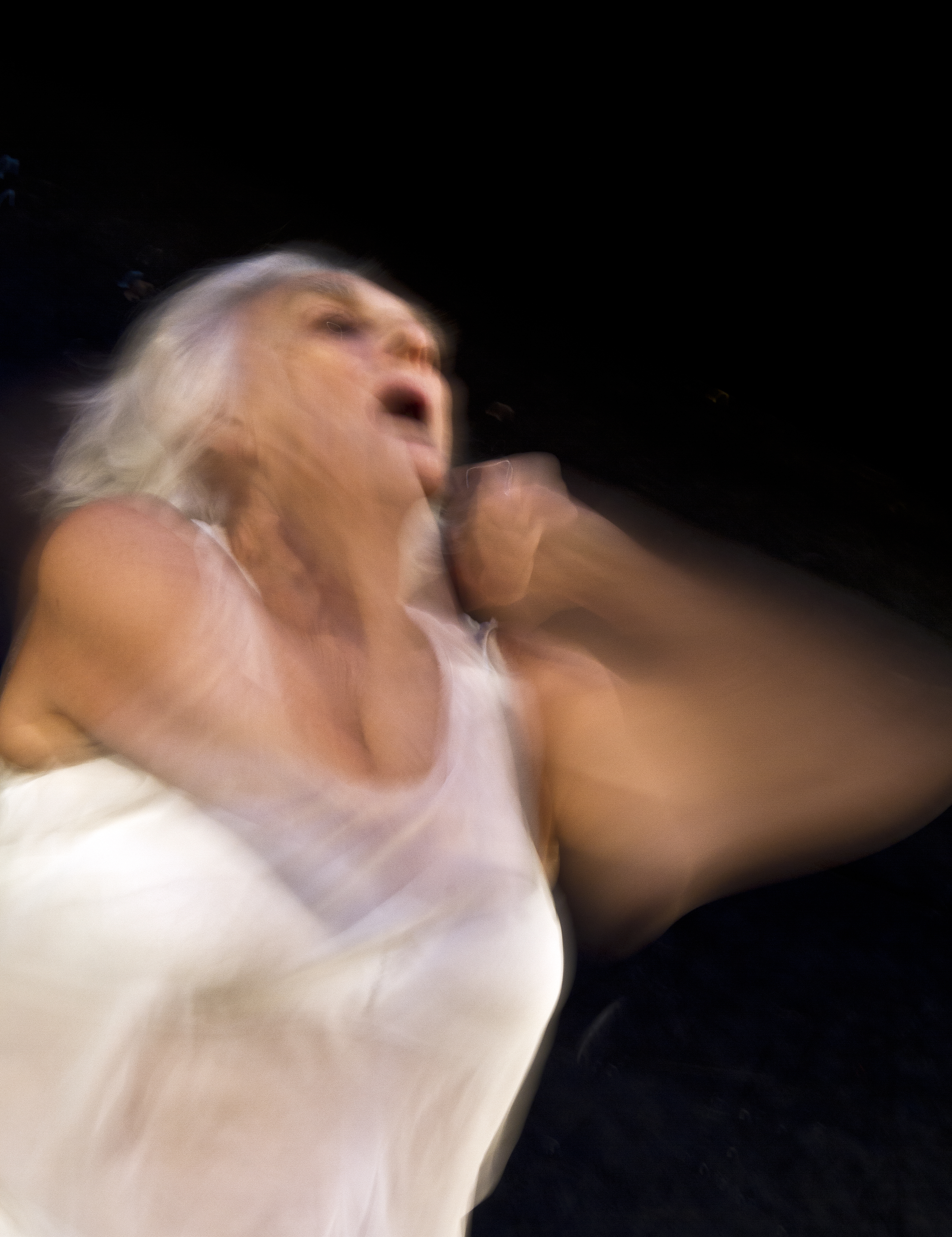
Saturday, February 10, 2018 (above)
Sunday February 11, 2018 (below)
(2018) February 10 and 11, DIGG, Dance Place, Washingston, DC a fiercely intimate multimedia performance experience created and performed by pioneering dance artist Maida Withers – an excavation of the current political landscape revealing a kaleidoscope of emotions, antagonisms, and suspicions. Maida’s experiences in both America and Russia are on display with Trump and Putin as central figures. DIGG reflects Maida’s interest in timely and thought-provoking interactive technology.
DIGG is a sequel to Withers’ Thresholds Crossed (2006), a multimedia opus “A fusion of East and West that explores the events, ideology and humanistic issues that engage notions relative to current political climate and conflicts.” Specifically, America and Russia relationship and values.
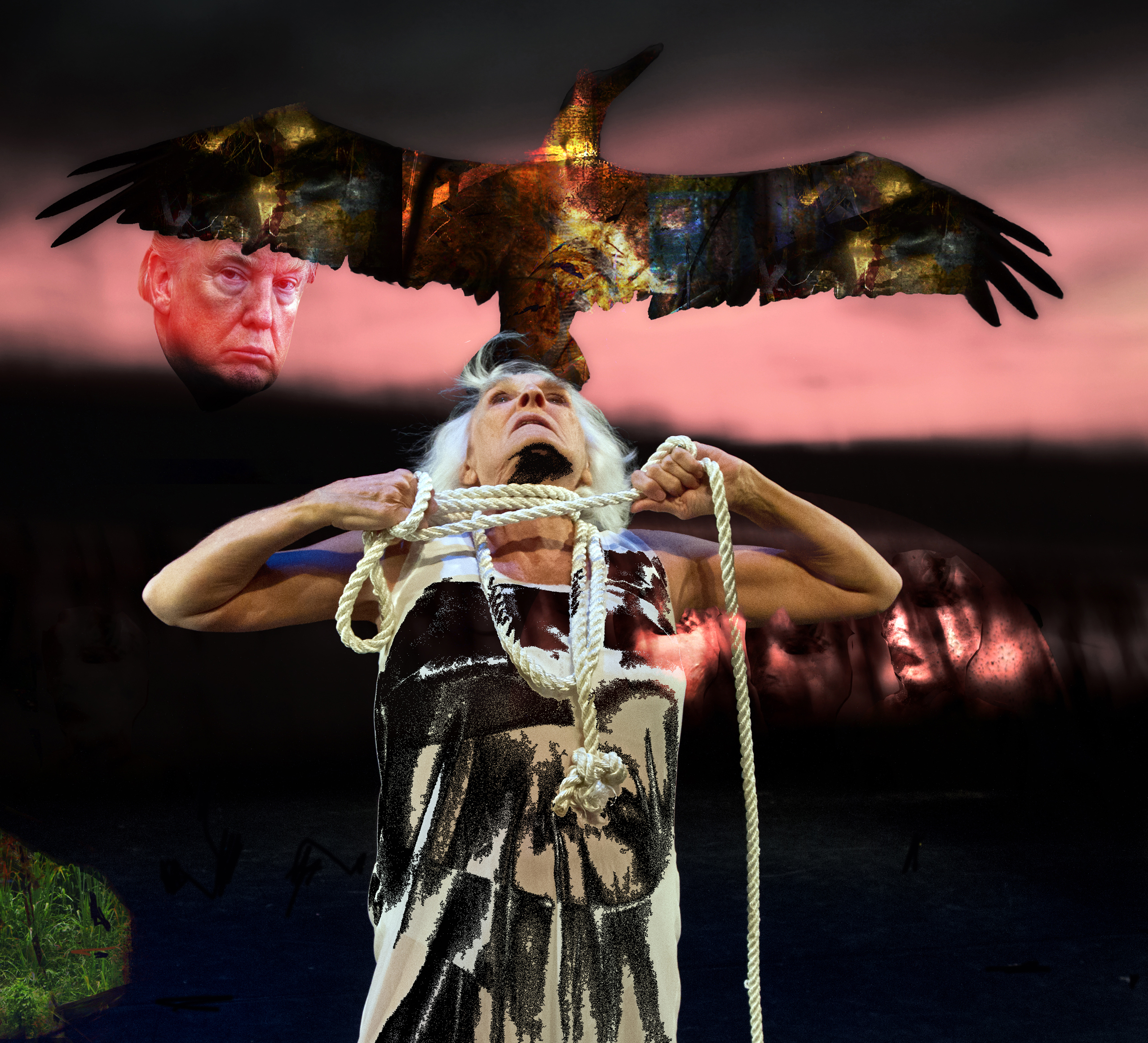
In DIGG there is a union of dance, emphatic gesture, vocal music, video, and text. Experimental vocalists, Audrey Chen (Berlin) and Phil Minton (UK) perform “reality-piercing” vocals. A captivating installation by filmmaker Linda Lewett and photographer Diane Falk features surrealistic footage of dancers shot by Maida in the 14th Century Monastery on Solovky Island, Russia coupled with intriguing and provocative photographic creations by Diane Falk, photographer and visual artist. DIGG is framed by Withers’ many tours and projects in Russia since 1996. Physical data for Digg, is inclusive of detailed information regarding technical production, useful for reconstruction.
DIGG was shared in a joint concert with Kei Takei, Moving Earth, China. Kei and Maida have a long history of association in China as well as America
DIGG: Diane Falk, photographs
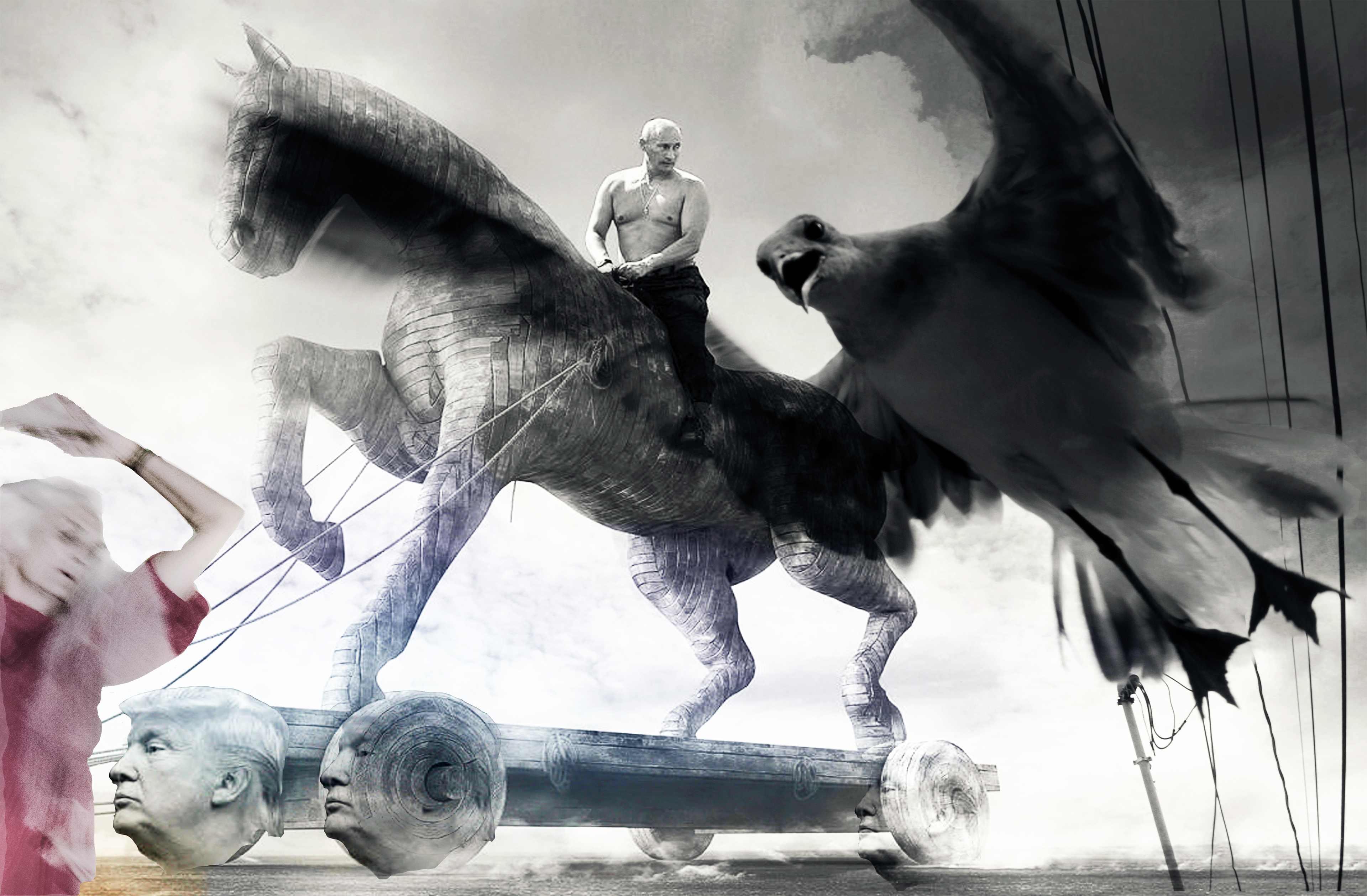
” In “DIGG” Withers dives into issues of Russian identity during this moment of political confusion and conflict.” Washingtonian Magazine
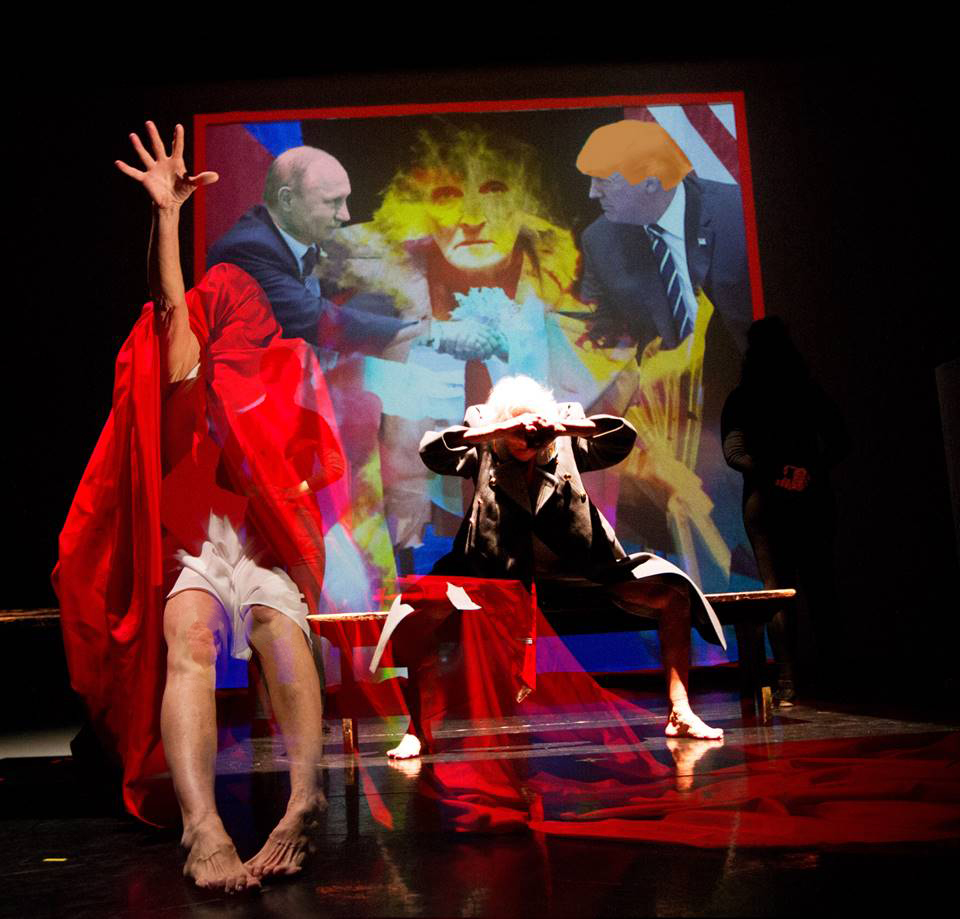 Diane Falk, Photographs/Collage
Dance film footage in DIGG was documented, Linda Lewett, videographer, in the Solovky Archipelago and the dungeons and alcoves of the 14th Century Solovetsky Monastery in northern Russia, White Sea, site of one location of the first Soviet-Era Gulag experiments during a summer residency of Maida Withers and the Dance Construction Company. Memories of Solovky are sobering, still, as are the unexpected events of politics today.
“There are times when words are inadequate to describe what one has seen. That’s often, if not always, true when it comes describing dance. Encapsulating a dance viewing experience is an incredible challenge. The performance of two powerhouses, Maida Rust Withers and Kei Takei, defies words. But as I’m limited to words here, I’ll just have it give it my best effort.” Critical Dance, C. Morgan
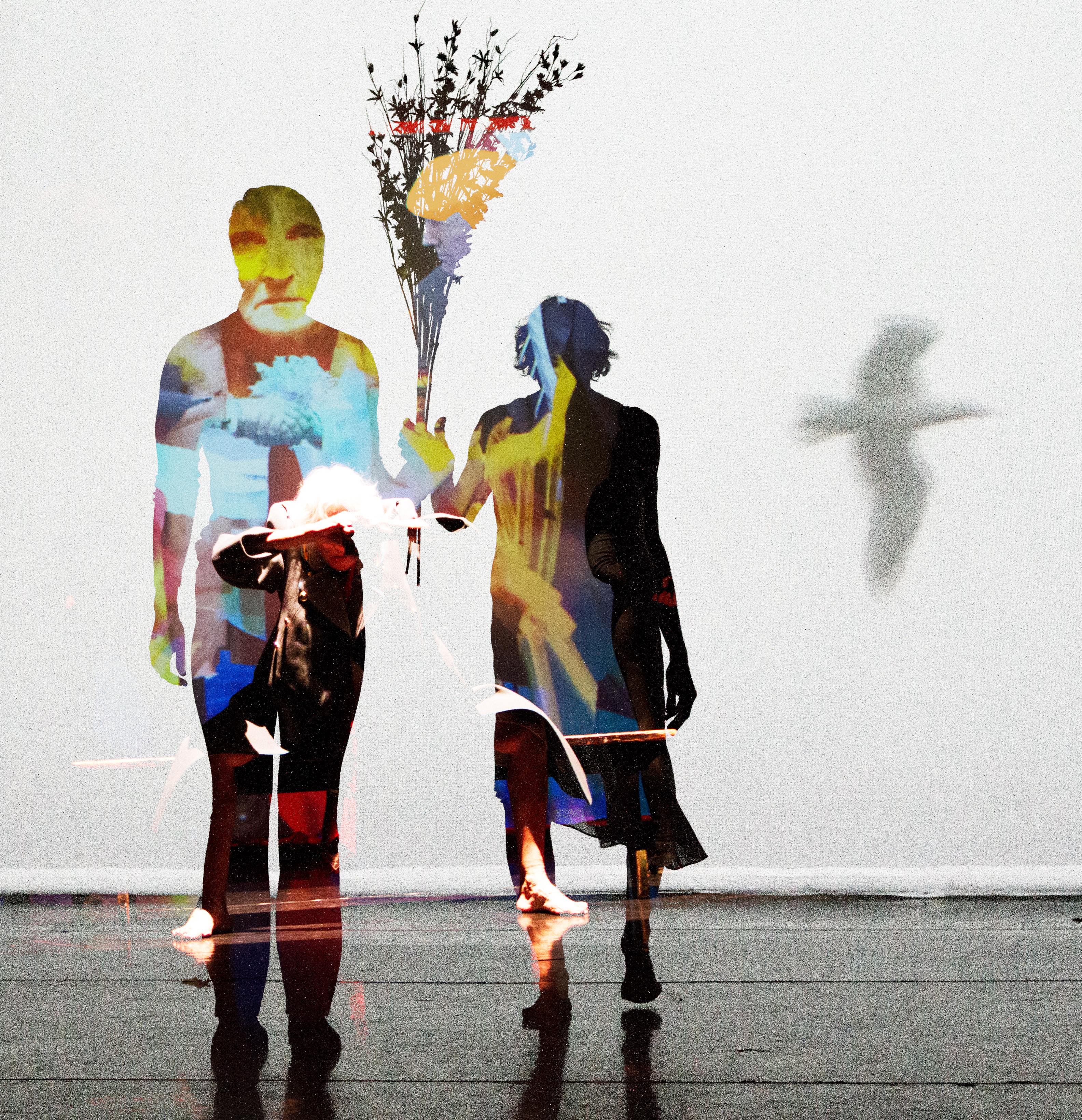
Performance photos/collage: Diane Falk

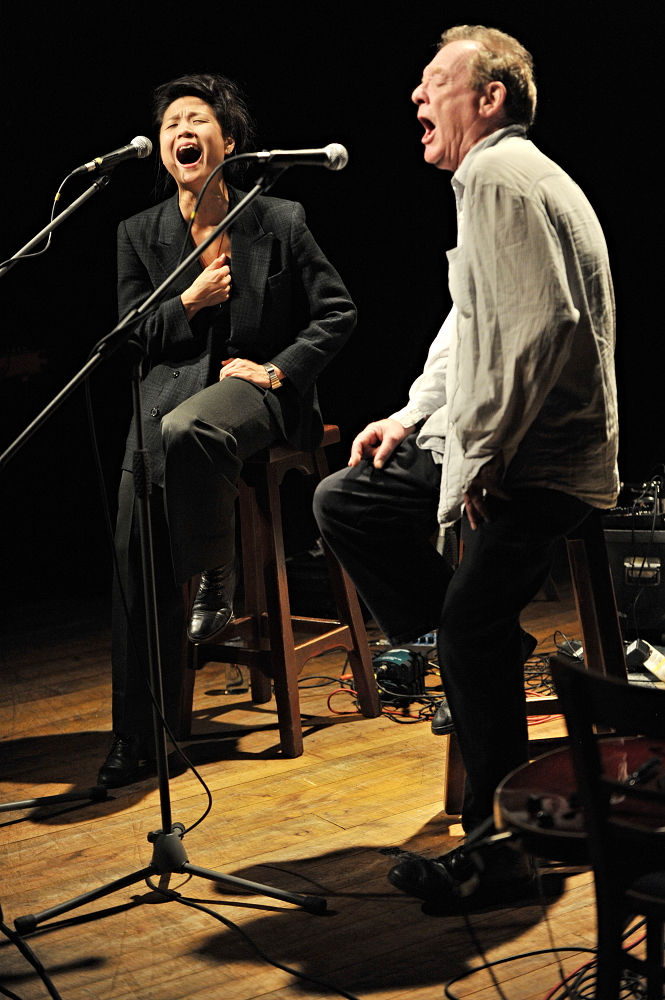
Extreme Vocals: Audrey Chen, Berlin and Phil Minton, England
For most of the last forty years, Minton has been working as a improvising singer in groups, orchestras and situations, in various locations worldwide. Some composers have written pieces that especially employ his extended vocal techniques and improvisations. Chen’s work delves deeply into her own version of narrative and non-linear storytelling. A large component of her music is improvised and her approach to this is extremely personal and visceral. Her playing explores the combination and layering of the homemade analog synthesizer, preparations and traditional and extended techniques in both the voice and cello. She works to join these elements into a singular ecstatic personal language.
Above: Projected in DIGG performance. Created by Motion Capture Lab – GW School of Engineering, James Hahn, Director, PhD Students.
Visual Installations: DIGG features three locations on stage to receive project visuals throughout the performance. The archives have detailed technical data should there be interest in reconstruction of DIGG.
DIGG: Photographs/Collages by Diane Falk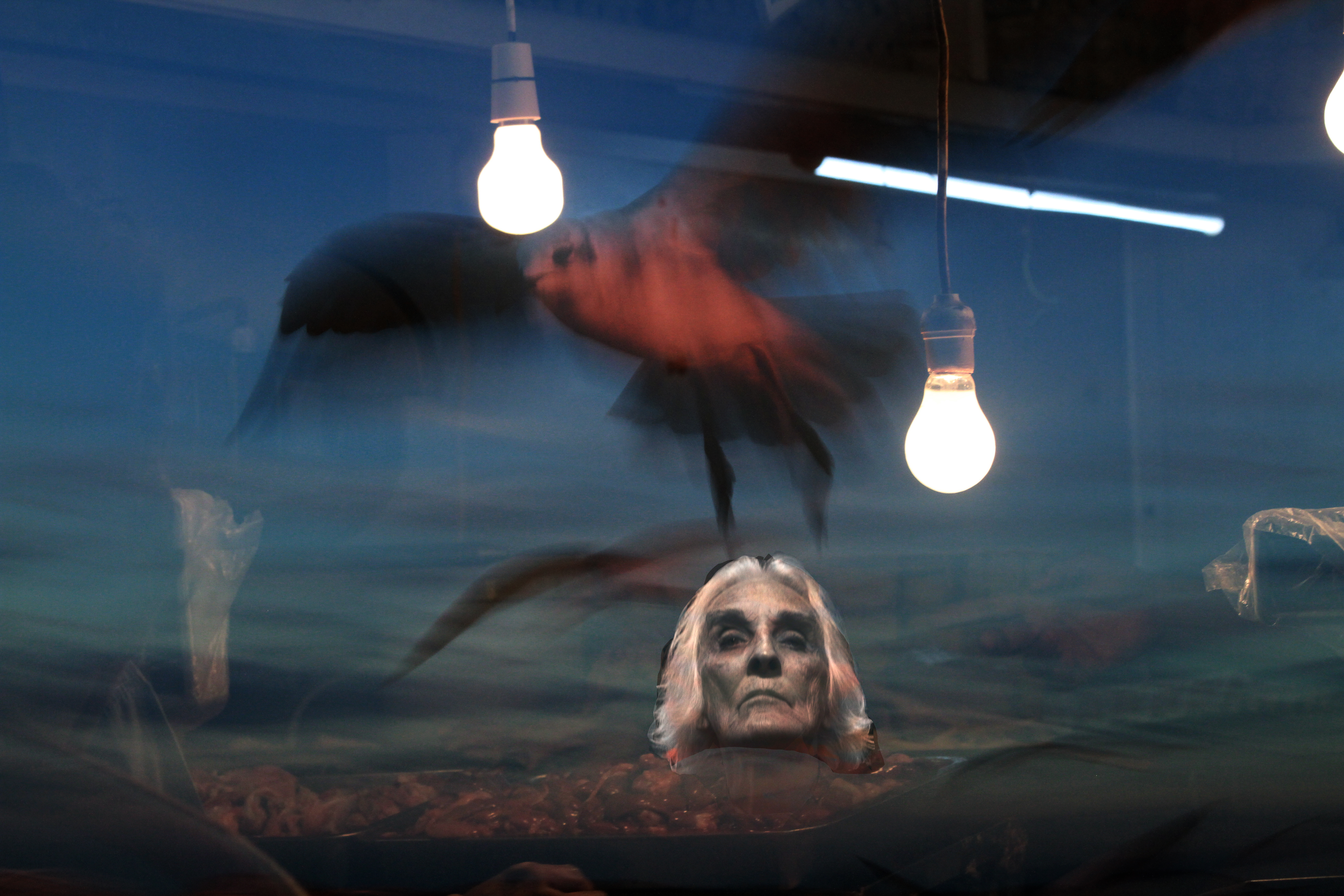
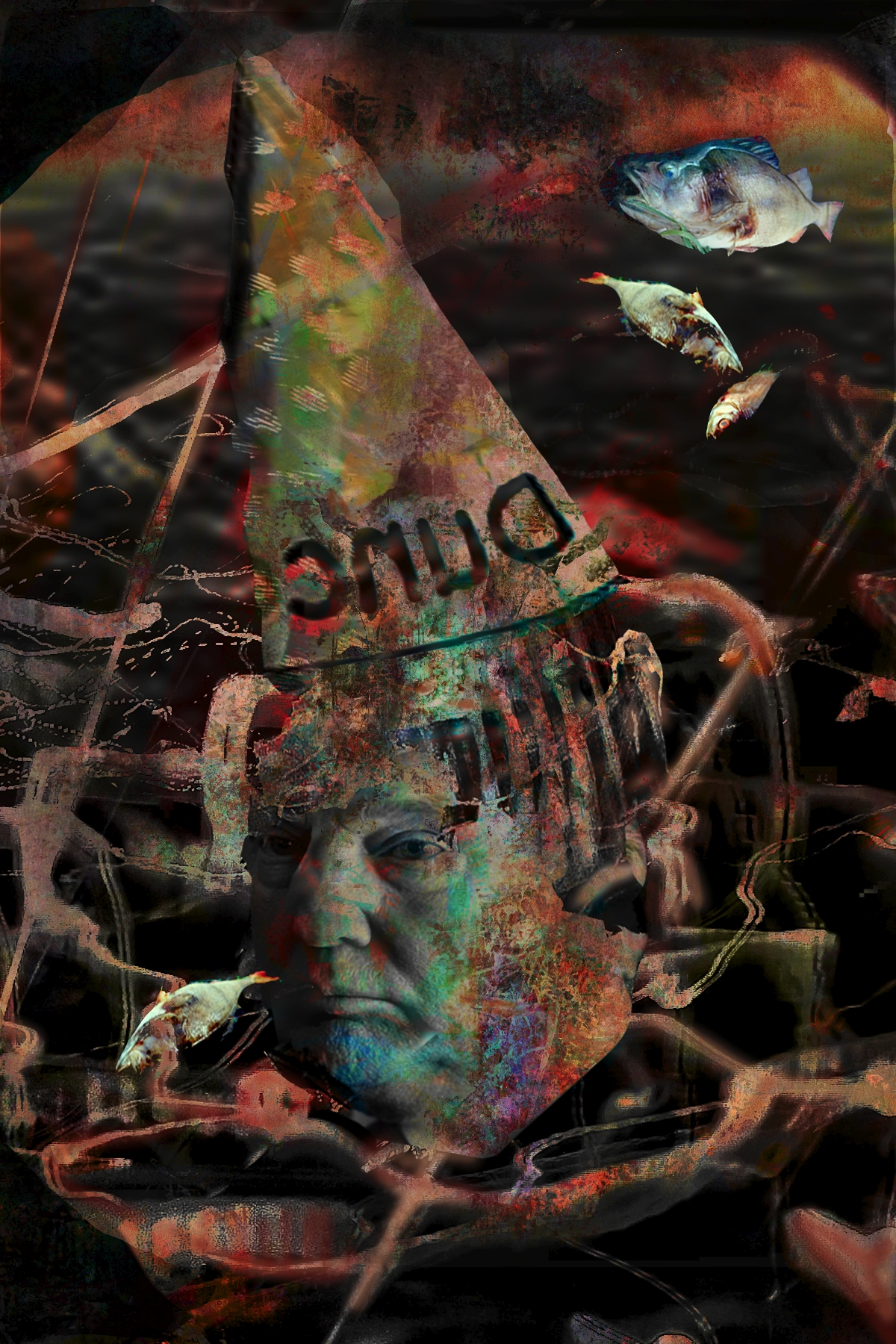

Promo video above: Linda Lewett
DIGG: Select video shorts, below:
View additional content from DIGG:
https://vimeo.com/264311935
https://vimeo.com/258150770
https://vimeo.com/234202626
https://vimeo.com/261878875
https://vimeo.com/250345262
https://vimeo.com/250344614
https://vimeo.com/258212453
https://vimeo.com/390858979
DIGG: Technical Specifications in Archives
DIGG is comprised of 19 integrated scenes. The original version of DIGG is 45 minutes in length. .
Theatrical lighting Light plot is available.
Projection QLab is used for the management of the projections comprised of film and animated photographs.
Objects Provided by the artist or purchased on tour.
Experimental Vocals: Performed live or recording.
Carmel Morgan Review in Critical Dance” http://criticaldance.org/kei-takei-maida-withers/
Kacie Peterson Review in Kacie Peterson Blog
https://twentyeightadventures.wordpress.com/reviews-of-dance/kei-takei-maida-withers-at-dance-place/
What the press is saying
"Withers is a dance legend." Carmel Morgan
Kei Takei & Maida Withers at Dance Place
Kei Takei & Maida Withers at Dance Place – Feb. 10 at 8pm
by Kacie Peterson
Maida Withers and Kei Takei presented an evening of dance from opposite sides of the visual spectrum on Saturday, February 10, at 8pm at Dance Place.
Withers presented her work DIGG first on the double artist program. DIGG was a display of unapologetic commentary on the global state of political affairs, or what Washingtonians know as the morning news. In a sophisticated mix of prop work, costuming and technology, Withers has created a work that spans the human experience of witnessing modern American politics: anxiety, fear, anger, nervous laughter and resilient hope.
Dressed in a straight-jacket, Withers set out on the lit path before her downstage. As she thrashed her body against the constraints of the costume, two “Shadow Figures” (played by Kristen Lamb and Linda Ryan) kept her from breaking outside the straight and narrow beam of light. It’s a relatable scene of the unrelenting struggle to survive in a society that seems determined to reverse its progress.
Having shaken free of the jacket, Withers continued while wearing a white nightgown, perhaps commenting on the fragility and purity of the original American Dream. Vocalists Audrey Chen and Phil Minton provided the movement’s soundtrack, working to enhance the emotional intensity already set in motion by Withers. At times, the duo’s vocal projections were physically uncomfortable to endure. Chen’s ability to shriek in high octaves had audience members plugging their ears. The point was clear: we should not be comfortable with our current situation. This is not normal.
The color red made a frequent appearance in DIGGS. Perhaps it’s meant as a snide tribute to Donald Trump’s tie color choice on the 2016 election campaign trail or as a blatant symbol of its association with power, energy and danger – either seemed fitting given Withers’ choreography. She’d briefly use a red silk handkerchief to gag herself before finding the strength in her voice and remove it. Later in the work, she’d be ultimately consumed, except for her head, by a giant red silk sheet. With only her head exposed, the Shadow Figures held the four corners and shook the sheet like a small child’s parachute in play. The intentional turbulence reminiscent of a daily news cycle – always up in the air.
Withers is a veteran of technology and movement integration and DIGGS is pure example of success. A filmed Withers tumbled down a long flight of stairs located in the woods, while onstage Withers moved up and down a light pattern that resembled stairs; a depiction of life imitating art.
With pop art visuals of collage images of Donald Trump and Vladimir Putin floating across the back wall, Withers, wearing a gray double-breasted, knee-length army coat and (seemingly symbolic) red tie sat on a bench parked center stage. She wrapped the tie around her neck in an attempt to hang herself. Graphics of Trump wearing a dunce cap overlapped the infamous photo of Putin riding a horse while shirtless. They were spliced with images of Withers wearing a rope around her neck. The section was visually striking, yet unsettling, but that seemed to be the intention.
The most poignant moments of the evening came as Withers’ sat on an upside-down bucket on a small platform in the upstage left space. She rattled off words, seemingly calling us into action. React. Realize. Rebrand. Recuse. Redo. Redon’t. Refrain. Subtle chuckles reverberated around the audience. Regret. Regenerate. Remorse. Remember. Withers sobbed. Withers laughed. Repeal. Replace. Resist. Resistance. Revolution. Withers cheered.
But alas, Withers’ message is one of hope. With two boughs of plants in hand and a dove shown flying across the back wall. It was a symbol of peace. As the image of a sunrise (or sunset) replaced the dove on the back wall, Withers reminded us there is another day coming. The Shadow Figures captured Withers in a full embrace, seemingly trapping the anxiety and fear built up throughout the work. There was an overwhelming release in that moment. We might feel trapped, but we are not alone. Withers melted to the floor and disappeared off stage. A simple “That’s it!” marked the end of her commentary.
The power of artistic vision and activism is not lost on Withers. It is her driving force, her creative fuel. She will always have something profound to say and it’s up to us to watch and listen.
On the opposite side of the spectrum, Kei Takei’s 2 Solos from Light, “LIGHT, Part 28” and “LIGHT, Part 47” channeled a softer, simpler approach to storytelling through movement.
In “LIGHT, Part 28,” Takei, holding a small wooden stool, slowly walked into the space, her path to the center of the stage illuminated. She staggered with one hip out, as if she’d spent a life trapped in an uncomfortable position. The sound of nature chirping welcomed her as she placed her stool and took the familiar seat.
She never went far from the stool, and yet, she also didn’t need to. The images she painted through her movement had me imagining her at the edge of a pond. As she gathered, shoved and kneaded the air around her, it was obvious she was gathering tall pond grasses, shoving water to make waves, kneading the mud in which she stood. She sat in her own pool of light, like sitting under microscope, as we examined her little world. Takei gave off an aura of abundant happiness. It was simple. It was refreshing. It felt of the earth.
In “LIGHT, Part 47,” Takai was no longer confined to the space around her stool. She was a gentle, yet powerful reminder that subtle progress is oftentimes overlooked while striving for great achievement.
Her journey began upstage center, arms splayed wide, crouched over like a speed skater about to take his mark. We expect to see a foot race. We expect noticeable progress. We expect too much.
She stood drenched in a pool of light, but she flirted with the edges. With her arms up, she was prepared for battle against what might wait just out of sight.
Takai has mastered the ability to captivate her audience with stillness and suspension. When an audience is deprived of their expectations, they watch and listen with great attention for the moments the artist does speak. We waited with baited breath, thirsty for more movement.
Her arms ran their own marathon, pumping with determination and force, but her feet remained (mostly) still. With her head down, we imagined the barriers and boundaries she faced head on. She was resilient. While her progress was minimal, she never once faltered. It was a theme she’d repeat until she was dripping with sweat. She was insisting we keep moving forward, even when it feels like we’re standing still.
Like particles of dust trapped in a beam of light, Takei suspended her upper torso into the backspace with her arms raised. Without warning, she stood in the front of the stage. Her performance was straightforward, but still a surprise to see her standing at the end.
Where she stood, seemingly finally exhausted, there was a beautiful moment of realization. As if she’d only just noticed she had an audience, Takei looked up, wide-eyed, and began to fade back into the darkness. It was a perfectly simple ending. It was a reminder that we’re not alone on our own journeys. We only need to look up.
Though both DIGG and 2 Solos from Light were performed by individual artists, the works tapped into the greater concept of the human journey: if one wants to go fast, go alone, but to go far, go together. Withers and Takai have chosen to go together. We’re all along for the ride. Carmel Morgan
"Withers has created a work that spans the human experience of witnessing modern American politics: anxiety, fear, anger, nervous laughter and resilient hope." Kacie Peterson
" In "DIGG" Withers dives into issues of Russian identity during this moment of political confusion and conflict." Washingtonian Magazine Roxann Morgan
Artists and Collaborators
- Concept, Choreographer; Objects
- Solo, Dancer
- Music - Extreme Vocals
- Dancers - Shadow Figures
- Filmmaker
- Projections Design
- Photographser / Projection
- Set Design
- Lighting Design
- Artists on Film
- Stage Manager
- Communications Director
- Motion Capture & Analysis Lab
- Pre-show Music
- Strait Jacket from Care Punishment
- Production Support